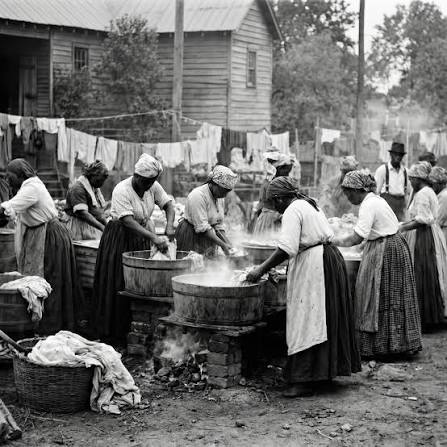
Honoring the generations of Black women's labor and their dreams for our freedom
Dear Sisters,
As August fades into September, I've decided to share more of what I'm reading as part of my commitment to dismantling systems of oppression. One of the most important weapons of our resistance as Black people has always been accessing our ability to read. As a published academic writer, my writing is based on research. Writing had taken a backseat in recent years, but I have begun writing again, and I'd love to share some of what I'm reading with those of you who are readers too.
August reflections call us into sovereignty—the practice of reclaiming our bodies and our time; establishing our boundaries, honoring them within our value systems, and nurturing our creativity. Sovereignty is not indulgence. It is resistance and liberation.
And once again, my message is about the importance of rest. We must reclaim it as our birthright again and again.
Our foremothers often carried rest in fragments—songs hummed while working, sacred conversations while braiding hair, prayers whispered in kitchens, closets, and beside beds. These were rituals of survival, not leisure. At the same time, their bodies were denied full rest, and their creativity was often suppressed by endless labor.
I recently read an article written by Nina Banks about Sadie Tanner Alexander, the United States' first Black Ph.D. economist. In the 1930's Alexander spoke out against proposed laws in Pennsylvania that didn't explicitly mention race but would effectively reduce white women's work hours from 55 hours to 40 hours per week, leaving Black women's workload unchanged. Ain't that some mess? Isn't that reminiscent of governmental policies today that don't directly name us, but place undue burden on our households? Alexander emphasized that African American women’s strong participation in the workforce was vital to both Black communities and the broader economy. She fought for women’s economic independence, challenged racial and gender inequities in labor laws, and revealed how discriminatory policies—like excluding domestic workers from New Deal protections—created lasting disparities that still shape Black women’s economic status today. As Nina Banks reminds us, Black women’s labor has always been central to economic freedom, even as their own rest was withheld.
Who benefits from our rest today?
When we rest today, we honor both truths: the rituals that sustained us and the rest that was denied. Our rest is reclamation, self-determination, and honoring our forebears' vision. Yes, rest, Sister, rest!
Reflection Questions:
- How do I honor the rest rituals my foremothers practiced, even in the midst of exploitation?
- How does my rest today reclaim what was denied to them?
- What new rituals of rest can I create as acts of sovereignty?
In my coaching practice, we explore how rest becomes a daily ritual of wellness. In the retreats I facilitate, we reclaim rest fully: as creativity, as self-care and as technology. And in our Sovereign Sessions, (weekly conversations about things that matter in our community), we gather weekly to embody rest as resistance and renewal together.
You will find the reference to the article below:
- Banks, N. (2022). Sadie T. M. Alexander: Black women and a “taste of freedom in the economic world.” Journal of Economic Perspectives, 36(1), 207–222.
Thinking of you all with love,
Sunya
